UAP Classification Guide
A data-driven reference for interpreting multi-spectral UAP observations captured in near-Earth environments.
Nine Observed UAP Classes
These categories represent the most consistently observed patterns in UAP behavior, shape, and sensor signature across multiple collection efforts.
The classification system presented below is a living taxonomy—subject to ongoing revision as new data is captured and analyzed by the Skywatcher team. The hypotheses associated with each class are exploratory in nature and should not be interpreted as conclusive scientific fact. This framework is intended to provide a foundational structure for the collection, analysis, and categorization of UAP data across multiple sensor domains.
Tetra
Class I

Description
Tetrahedron shaped UAP which tumbles on multiple axes while on a stable flight path. Often appears in groups of 3-20+.
Visual Profile
Black with intermittent white vapor bursts. Exhibits strobing effect on electro-optical (EO) sensors several times per second.
Technical Specifications
- Size: 1.5 - 2 meters
- Flight Behavior: Appears to tumble at high speed across multiple axes while maintaining a stable overall flight path. Typically descends from high altitude to below ~2,000 ft AGL.
Characteristics
Frequently observed in coordinated sortie formations ranging from 3 to 20+. Known for unpredictable movements when engaged or targeted, including extreme evasive maneuvers that exceed camera tracking capabilities.
Interactions
When targeted by laser rangefinders, Tetra craft exhibit jinking behavior—moving so rapidly that EO/IR sensors struggle to maintain a lock. No reflective return when lased.
Sensor Signature
Strong infrared (IR) signature with clear heat emissions. No off-gassing, vapor trails, or propulsion indicators detected across multiple sensors.
Tic Tac
Class II
Description
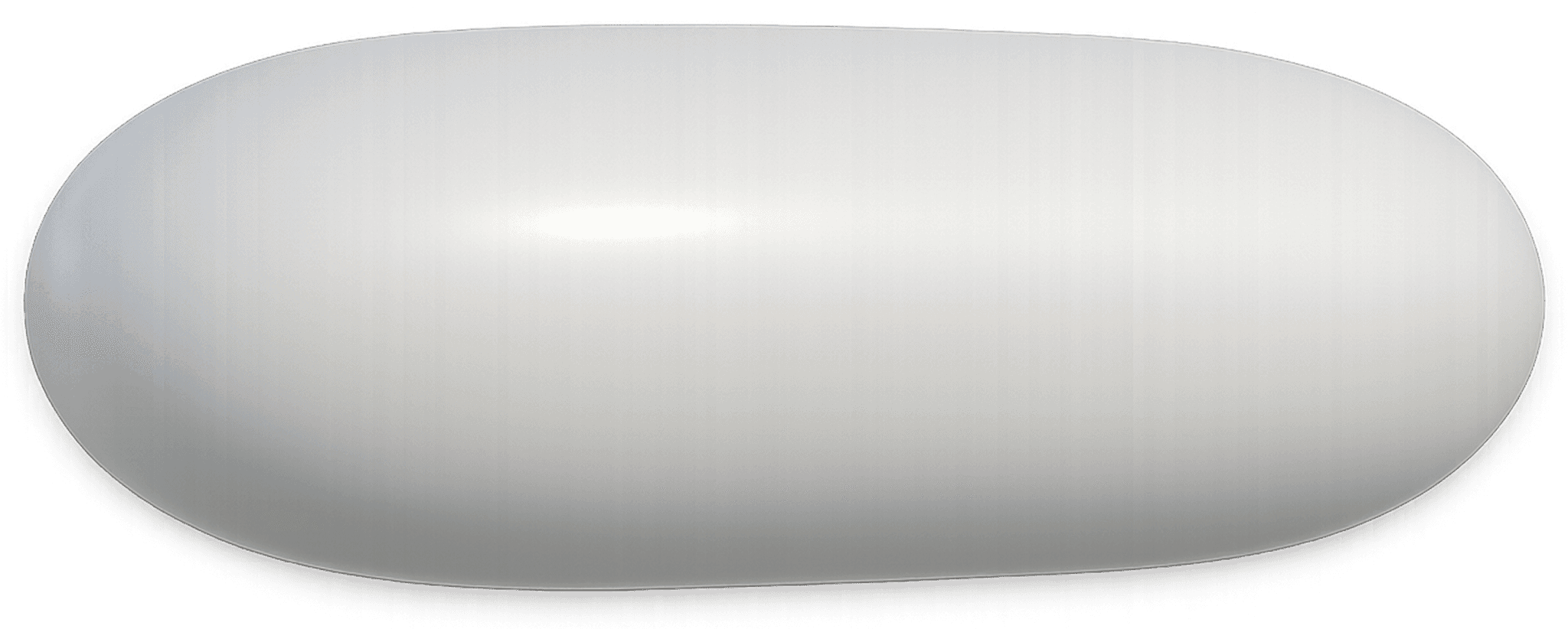
Cylindrical UAP that hovers. Elongates during stable flight and has an area effect on electronics and aircraft. Seen in groups of 1 to 3. Observed with the Manta Ray in proximity.
Visual Profile
Bright white cylindrical craft that shifts shape during flight. Observed to elongate horizontally and shift color from white to purple to pink during transitions. Easily observable on IR.
Technical Specifications
- Size: 9 - 12 meters
- Flight Behavior: Capable of vertical hovering with oscillation, rapid descent from high altitudes, assessed as 60,000+ feet and Mach 1.5+, and abrupt arrest of motion mid-air. Frequently tumbles while descending and then stabilizes before resuming flight. Uses terrain masking and performs independent, unsynchronized maneuvers in proximity to other craft.
Characteristics
Seen in groups of 1 to 3. Displays highly dynamic shape-shifting and color variation correlated with flight phases. Observed to operate in vicinity of Manta Ray class UAPs.
Interactions
Helicopter aircrew reported physiological effects (nausea, disorientation) during proximity exposure. One successful LRF return; no radar acquisition. Noted instances of nearby aircraft becoming briefly immobilized ("frozen").
Sensor Signature
Strong IR visibility with heat signature detected. No vapor trails, off-gassing, or observable propulsion methods. Evades primary sensors using terrain masking and altitude variation.
Blob
Class III
Description
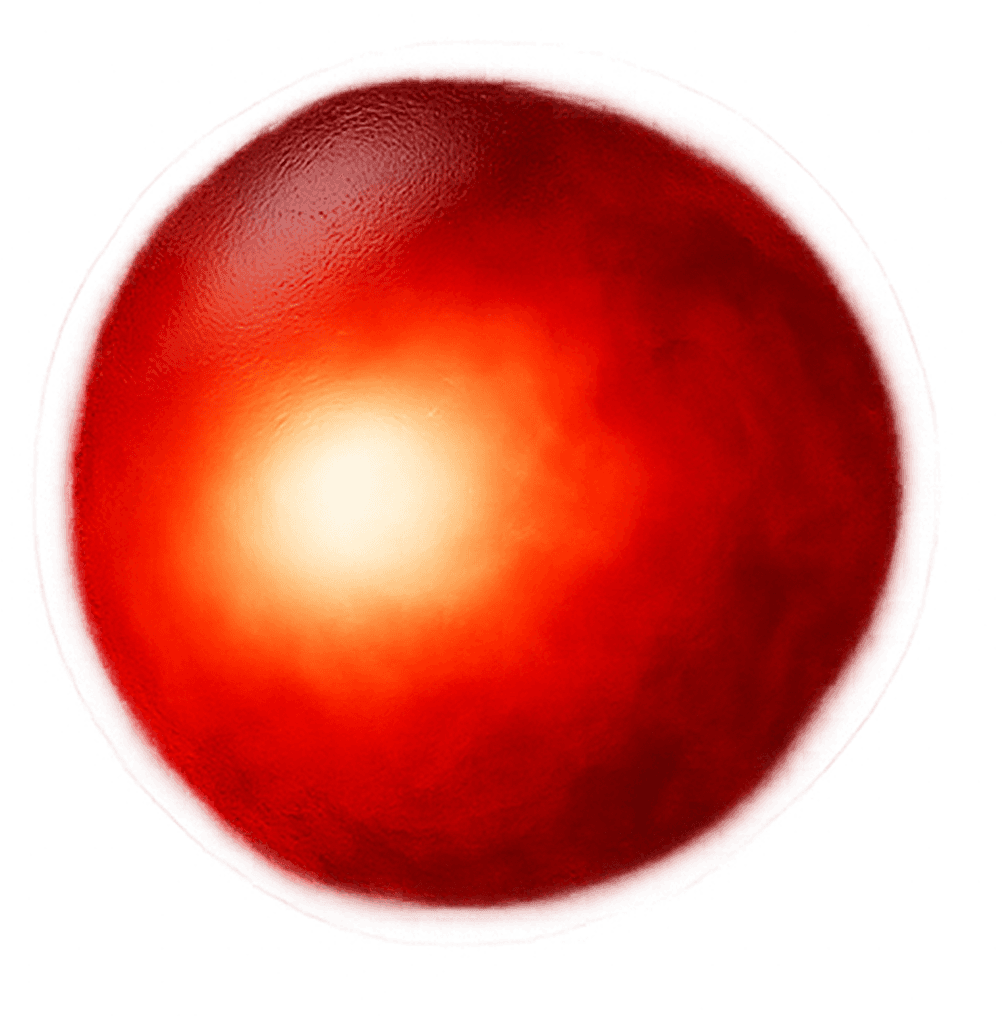
Orb-shaped UAP that exhibits pulsing internal light, horizontal oscillation, and erratic point-to-point movement. Capable of extreme speed and rapid flare-driven expansion. Observed exclusively as singletons.
Visual Profile
Red cloud-like orb with a pulsing, light-bodied core. The central element flares in size and brightness, at times expanding into a large red amorphous form. No visible propulsion observed. Easily detected on IR with strong heat signature.
Technical Specifications
- Size: 3 - 5 meters
- Flight Behavior: Exhibits rapid, near-instantaneous jumps between positions with no observable transition or acceleration. Movement is generally erratic but often includes lateral oscillation. During motion or flare events, the form expands significantly, appearing to pulse or distort in size.
Characteristics
Appears as a singleton. Exhibits internal energy fluctuations and flare behavior, with irregular pulsing that suggests non-random internal dynamics.
Interactions
No direct interactions recorded. Observed behavior includes variable intensity and flare-ups from within the red cloud form, but no reported effects on sensors or personnel.
Sensor Signature
Easily visible in the infrared spectrum with a strong and consistent heat signature. No off-gassing, vapor trails, or propulsion indicators detected. Flight patterns and energy flare-ups suggest non-conventional movement mechanisms.
Beam
Class IV

Description
IR-only orb-shaped UAP that vibrates while in a stable flight path. Hovers in place for hours at a time. Seen in pairs.
Visual Profile
Not visible in EO spectrum; only observable on IR. Presents as a stable, orb-shaped UAP with a strong heat signature and no off-gassing or visible propulsion.
Technical Specifications
- Size: Unknown
- Flight Behavior: Exhibits prolonged hovering, often remaining motionless for over an hour. Movement, when observed, is slow and deliberate. Vibrates laterally while maintaining a generally stable flight path.
Characteristics
Typically seen in pairs. Displays consistent IR presence but no EO confirmation. Some sightings may be misattributed celestial bodies due to sensor limitations or viewing angle.
Interactions
When lased, the UAP demonstrated evasive behavior—executing sharp movements suggestive of high-G dodges. In one case, a Jam-On event caused the IR signature to "iris" (fade out), which reversed after Jam-Off, indicating potential sensor awareness or modulation.
Sensor Signature
Strongly visible on IR, completely absent on EO. No signs of traditional propulsion. Responsive to external energy interactions, with observable changes in signature behavior under directed stimuli.
Manta Ray
Class V
Description
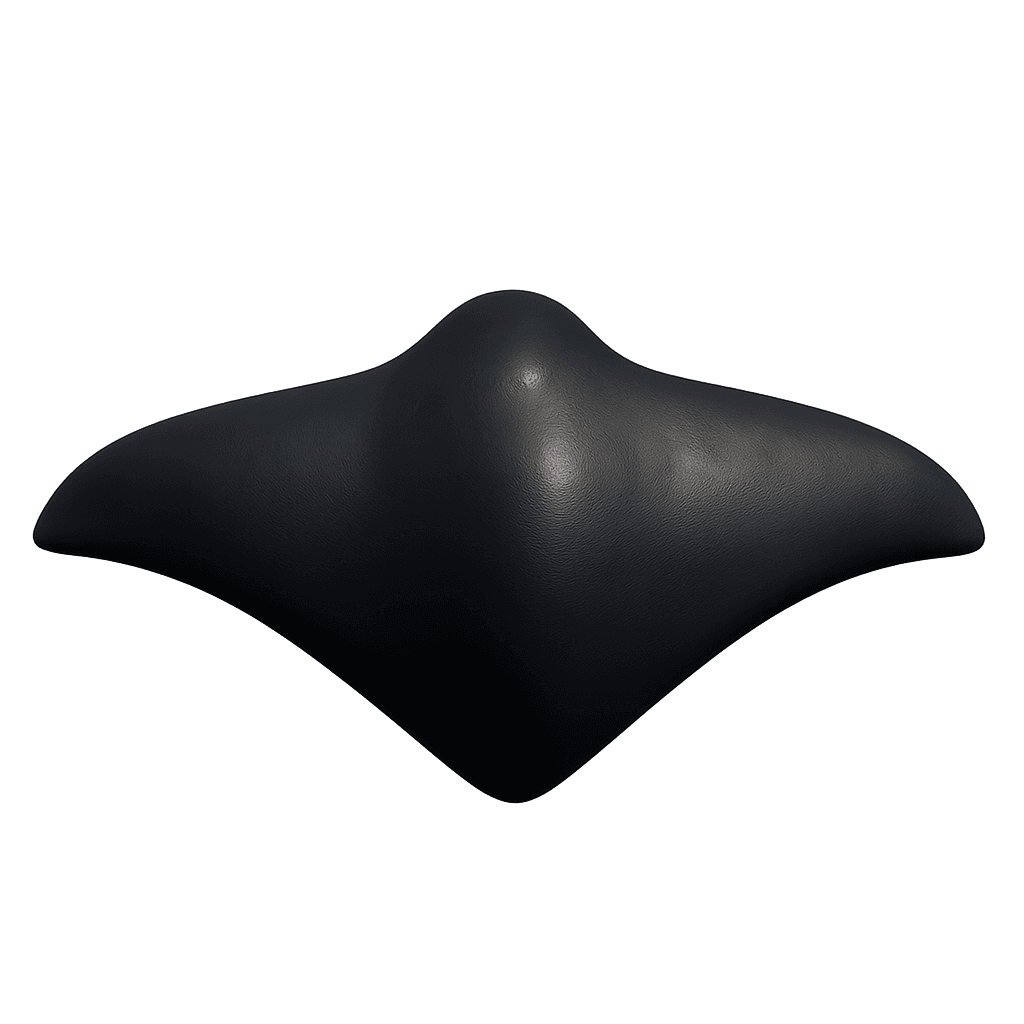
Manta-ray shaped UAP that tumbles on multiple axes. Rarely seen; observed in proximity to Tic Tacs.
Visual Profile
Black, manta-ray shaped craft. Emits colored vapor or light from multiple points, including pink, green, teal, and translucent/white hues. Plumage appears to radiate from the top surface.
Technical Specifications
- Size: 2 - 3 meters
- Flight Behavior: Observed tumbling and rotating on multiple axes. Capable of hovering in place and rapidly shifting altitude. Movements include both wind-assisted and wind-opposed trajectories at varying speeds.
Characteristics
Rarely seen. Noted to appear in proximity to Tic Tac-class UAP. Capable of vanishing from view instantly. Uses terrain for concealment, indicating strategic awareness.
Interactions
No observed interaction with team sensors or direct energy, but terrain masking and visual disappearance suggest advanced evasion or cloaking techniques.
Sensor Signature
Detected on both EO and IR. Presents a strong heat signature, though no off-gassing or visible propulsion trails are observed. Confirmed radar tracks during some sightings.
Bright Star
Class VI

Description
Reflective, tetrahedron-shaped UAP that oscillates horizontally, flashing light. Team has experienced sensor disruption apparently caused by directed energy.
Visual Profile
Reflective, tetrahedron-shaped craft that flashes in teal, green, blue, red, and white light spectrums. Appears to shimmer across its surface in EO view. Endpoints of the craft are less opaque, possibly due to active plumage or light-based extension effects.
Technical Specifications
- Size: 1.5 - 3 meters
- Flight Behavior: Exhibits rapid horizontal oscillation, fast enough to produce radar artifacts resembling a spinning propeller. Movement is erratic and high-frequency, but contained within a lateral plane.
Characteristics
Craft surfaces appear to extend or distort shape through plumes and flashing light. Exhibits high reflectivity and partial transparency at extremities. Oscillation patterns contribute to radar misinterpretation.
Interactions
Demonstrated directed energy effects against the team.
Sensor Signature
Strong heat signature in IR. Easily observable across EO/IR. No signs of conventional propulsion, trails, or off-gassing.
Jellyfish
Class VII

Description
Jellyfish-shaped UAP with "seeking" head motion and trailing tentacles. Exhibits a localized area effect on electronics, independent of specific targeting or interaction with sensors.
Visual Profile
White, jellyfish-shaped craft with a bulbous head and trailing tentacle-like appendages. The head comprises roughly 1/5 of the overall length, while the tail extends downward and appears to move independently of wind conditions. Observable on both EO and IR.
Technical Specifications
- Size: 2 meters (head), 3 - 5 meters (tentacles)
- Flight Behavior: Exhibits winding, snake-like movement along deliberate flight paths. The craft often moves from point to point in a meandering, serpentine motion.
Characteristics
Head appears to "seek" or scan during flight. The lower tendrils trail behind but do not react to external airflow, suggesting self-regulation or internal stabilization. Often visually mistaken for Class VI or VIII at a distance due to shared movement or profile characteristics.
Interactions
Has demonstrated electromagnetic interference capabilities. Conducted sustained electronic warfare (EW) effects that disrupted team equipment, though the effect did not appear directly targeted or weaponized.
Sensor Signature
Strong IR and radar signatures. No observable propulsion, exhaust, or off-gassing. Easily detectable on standard EO/IR platforms.
Hornet
Class VIII

Description
Dual-body UAP with hanging tendrils and asynchronous rotation.
Visual Profile
Multi-part craft with purple, red, blue, and black coloration. Features a prominent "tail" that folds into a ball or extends in a stinger-like formation. The upper segment contains hanging tendrils, within which a secondary body appears to rest. Reflective flashes observed during flight.
Technical Specifications
- Size: 2 - 4 meters
- Flight Behavior: Exhibits irregular motion and asynchronous rotation between upper and lower components. Rolls on both pitch and yaw axes while maneuvering.
Characteristics
Top and bottom craft may be physically connected, though this remains unconfirmed. Displays no consistent shape or motion pattern. Visually resembles other classes (VI/VII) at a distance due to erratic, flashing profile.
Interactions
No direct energy effects noted, but its diversion toward the team and sudden descent suggest intentionality or awareness. Briefly visible to the naked eye through optical scopes as it passed overhead.
Sensor Signature
Strong radar tracks and heat signature detected. Observable on IR. No signs of conventional propulsion, trails, or off-gassing.
Egg
Class IX

Description
Off-white, egg-shaped UAP. Provisional class designation; no corroborated motion, structure, or spectral data.
Visual Profile
Off-white metallic, egg-shaped craft. Visual data is limited to a single, low-quality recording. No observable propulsion, vapor trails, or aerodynamic control surfaces. EO-visible; IR and other multi-spectral sensor coverage was unavailable during observation.
Technical Specifications
- Size: Unknown
- Flight Behavior: Undocumented. No verified pattern of motion has been established due to insufficient data. No radar tracking available during sightings to confirm flight behavior.
Characteristics
Class IX remains a provisional designation based on early observational data. Anecdotal reports suggest targeted appearance near team location, but no definitive motion profile, structural details, or repeat sightings have been confirmed.
Interactions
N/A
Sensor Signature
EO-visible with no signs of off-gassing or traditional propulsion. No radar signature confirmed. No IR (MWIR or SWIR) validation due to absence of relevant sensors during the sighting.